

































April 02, 2026


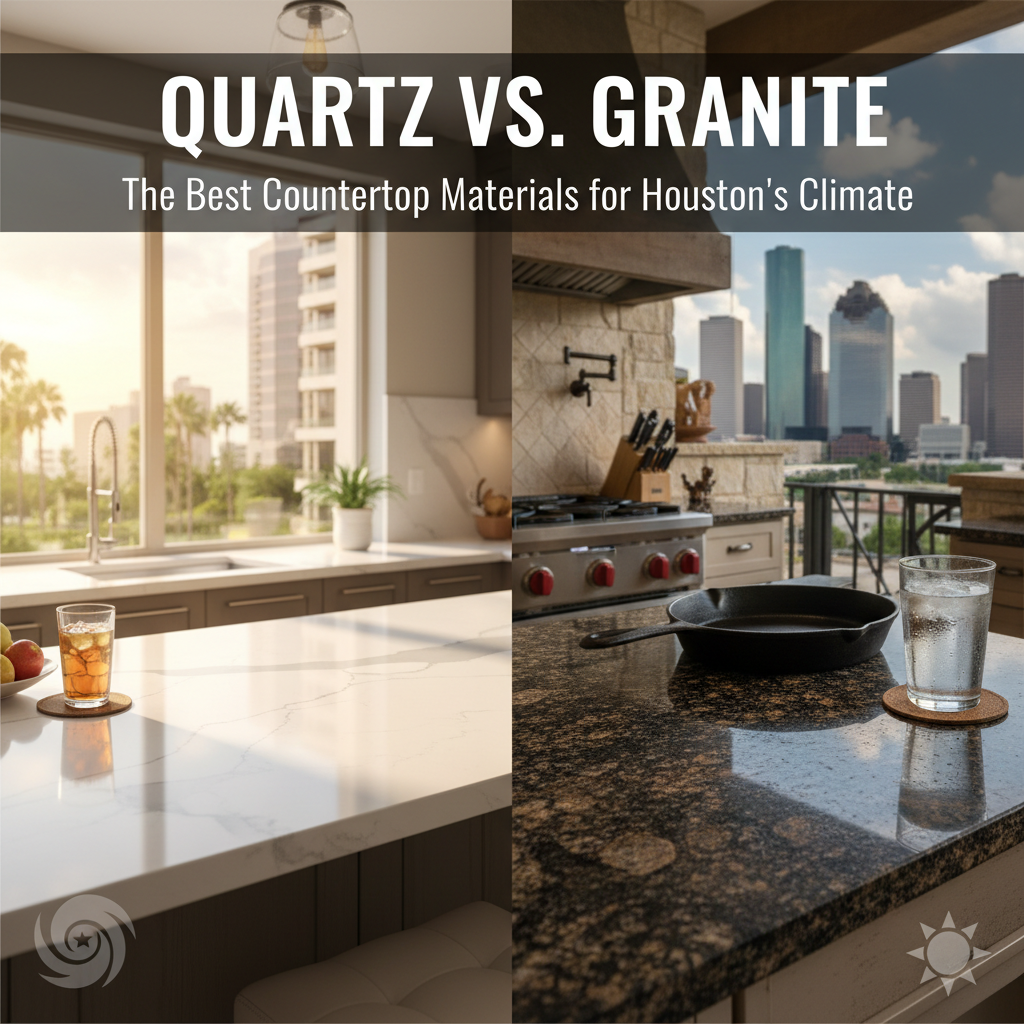
Quartz vs. Granite: The Best Countertop Materials for Houston’s Climate
Choosing between quartz and granite involves balancing aesthetics with performance, especially in a unique environment like the Texas Gulf Coast. For Houston homeowners, quartz is generally the superior choice for humid climates because its non-porous, engineered surface prevents moisture absorption and mold growth. However, granite remains the top choice for outdoor kitchens due to its natural heat resistance and UV stability.
Choosing between quartz and granite involves balancing aesthetics with performance, especially in a unique environment like the Texas Gulf Coast. For Houston homeowners, quartz is generally the superior choice for humid climates because its non-porous, engineered surface prevents moisture absorption and mold growth. However, granite remains the top choice for outdoor kitchens due to its natural heat resistance and UV stability.
Quartz vs. Granite: Which Is Best for Houston’s Humid Climate?
In the humid Houston climate, the best kitchen countertops are those that resist moisture and bacterial growth. Quartz is an engineered stone made of roughly 90-94% crushed quartz and 6-10% polymer resins, making it entirely non-porous. Unlike natural stone, it does not require sealing to prevent stains or liquid penetration.
While granite is a highly durable natural igneous rock, it is inherently porous. In high-humidity areas like Houston, unsealed or poorly sealed granite can trap moisture within its microscopic pores, potentially leading to "stone rot" or bacterial colonization over time. For indoor kitchens with consistent climate control, both materials perform well, but quartz offers a "set it and forget it" advantage regarding moisture maintenance.
📈 Avg. Annual Maintenance (Houston Climate)
Why Porosity Matters in High Humidity
Porosity refers to the void spaces within a material that can hold air or liquid. In Houston, where indoor humidity levels can fluctuate, a porous countertop can act like a sponge. Based on our experience as a houston general contractor, we’ve seen that homeowners who neglect granite sealing in older homes often face "ghost staining"—dark spots caused by trapped moisture that refuses to evaporate.
Microbial Resistance and Indoor Air Quality
Because quartz is non-porous, it is naturally antimicrobial. Mold and mildew cannot find a foothold inside the slab. For families concerned with hygiene, quartz provides a surface that is easier to sanitize without the risk of stripping away a chemical sealant.
The Performance of Quartz Countertop Benefits
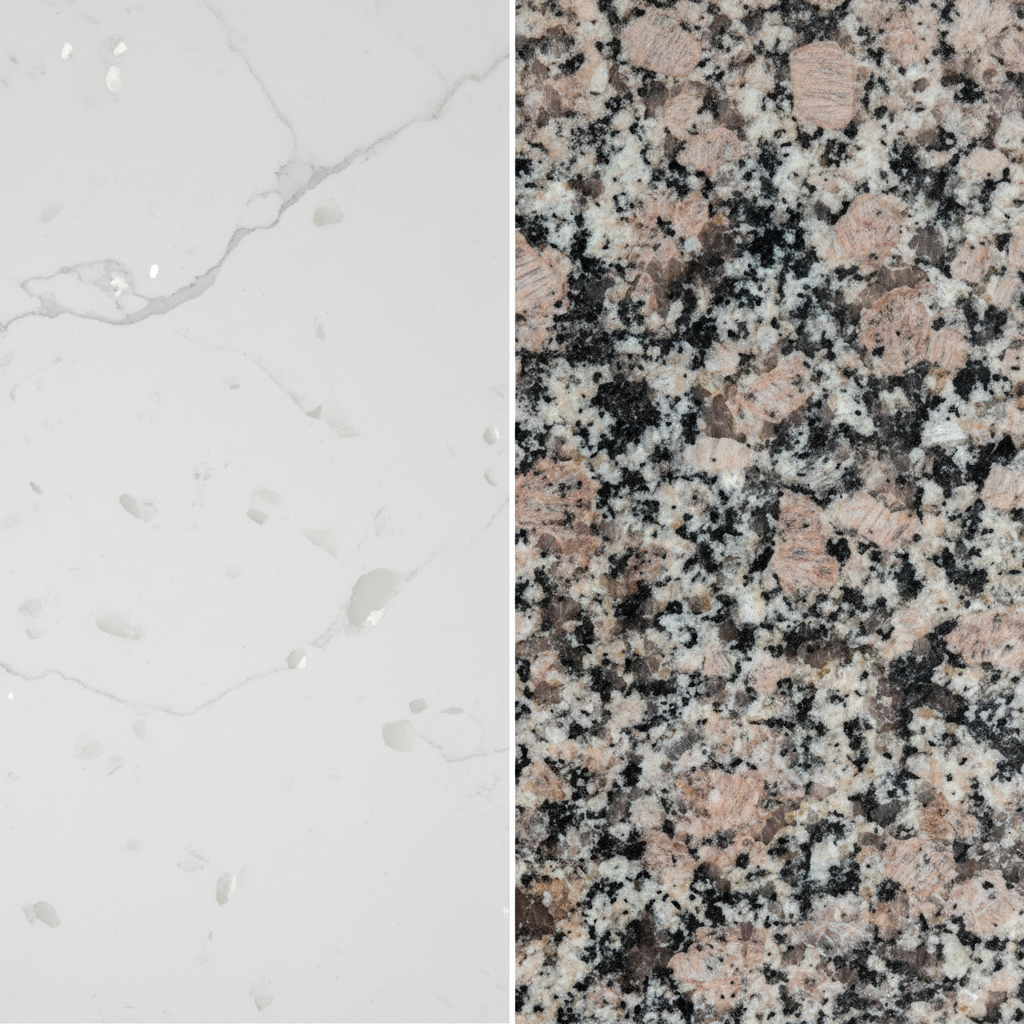
Quartz countertop benefits extend beyond moisture resistance; they offer unparalleled uniformity and impact resistance. Because quartz is a manufactured product, it eliminates the structural "weak spots" or fissures often found in natural granite slabs.
In practice, this means quartz is less likely to chip or crack if a heavy cast-iron skillet is dropped on the edge. Furthermore, quartz provides design consistency. If you are remodeling a large kitchen that requires multiple slabs, quartz ensures that the pattern and color match perfectly across seams—a feat that is often difficult with the wild variations of natural granite.
Durability and Scratch Resistance
Quartz ranks roughly a 7 on the Mohs scale of mineral hardness, making it extremely difficult to scratch. While granite is similarly hard, it is more brittle. Based on real-world results from our renovation projects, quartz edges tend to hold up better in high-traffic kitchens with children or frequent entertaining.
Color Stability in Texas Sunlight
A common misconception is that quartz is "indestructible." While it excels indoors, quartz does have a weakness: UV sensitivity. The resins used to bind the quartz particles can discolor or turn yellow when exposed to direct, intense sunlight for several hours a day. If your Houston kitchen has massive, unshaded south-facing windows, granite may be the safer long-term aesthetic choice.
"In the Houston market, we’ve seen quartz installations increase by nearly 40% over the last five years, primarily due to the low-maintenance lifestyle local homeowners demand." — Blue Jay Design Team
Why Granite Remains a Top Competitor for Houston Homes
Granite is a 100% natural stone harvested from the earth into solid slabs. Each piece is unique, offering a level of depth and "movement" that even the best quartz imitations struggle to replicate. For many, the raw, organic beauty of granite is worth the additional maintenance.
For outdoor applications—which are incredibly popular in Southeast Texas—granite is the undisputed king. Whether it’s a poolside bar or a covered patio kitchen, granite can withstand the 100°F+ Houston summers without warping, fading, or melting.
Heat Resistance in the Kitchen
One area where granite outperforms quartz is thermal shock resistance. Granite can typically handle a hot pan placed directly on its surface (though we still recommend trivets). Quartz, because of its resin content, can suffer from "thermoplastic deformation" or permanent scorch marks if exposed to temperatures above 300°F.
Return on Investment (ROI) and Resale Value
Both materials are considered "premium" and typically yield a 60-80% return on investment during a home sale. However, in high-end Houston real estate markets like River Oaks or The Heights, "natural stone" often carries a specific prestige that engineered quartz cannot always match.
🥧 Countertop Mkt. Share in Houston Remodels
Quartz: 52% (52.0%)Quartz: 52%
Granite: 35% (35.0%)Granite: 35%
Marble: 8% (8.0%)Marble: 8%
Other (Butcher Block, Tile): 5% (5.0%)Other (Butcher Bloc…: 5%
Cost Comparison: Quartz vs. Granite in the Houston Market
When hiring a general contractor in houston, budgeting is often the deciding factor. Generally, the price gap between quartz and granite has narrowed significantly over the last decade.
Average Pricing Structures
Entry-Level Granite: $40–$60 per square foot. These are often "Level 1" stones with tighter, more consistent patterns (like Uba Tuba or Santa Cecilia).
Standard Quartz: $60–$85 per square foot. High-quality brands like Silestone or Caesarstone fall into this bracket.
Exotic Granite/Premium Quartz: $100+ per square foot. This includes rare granite colors or quartz with intricate "calacatta" veining.
ℹ️ Info
Pro Tip: Always ask your contractor for "remnant" pricing if you are only doing a small bathroom vanity or a kitchen island. You can often get premium granite or quartz at a 30-50% discount by using leftover pieces from larger jobs.
Summary: Making the Right Choice for Your Home
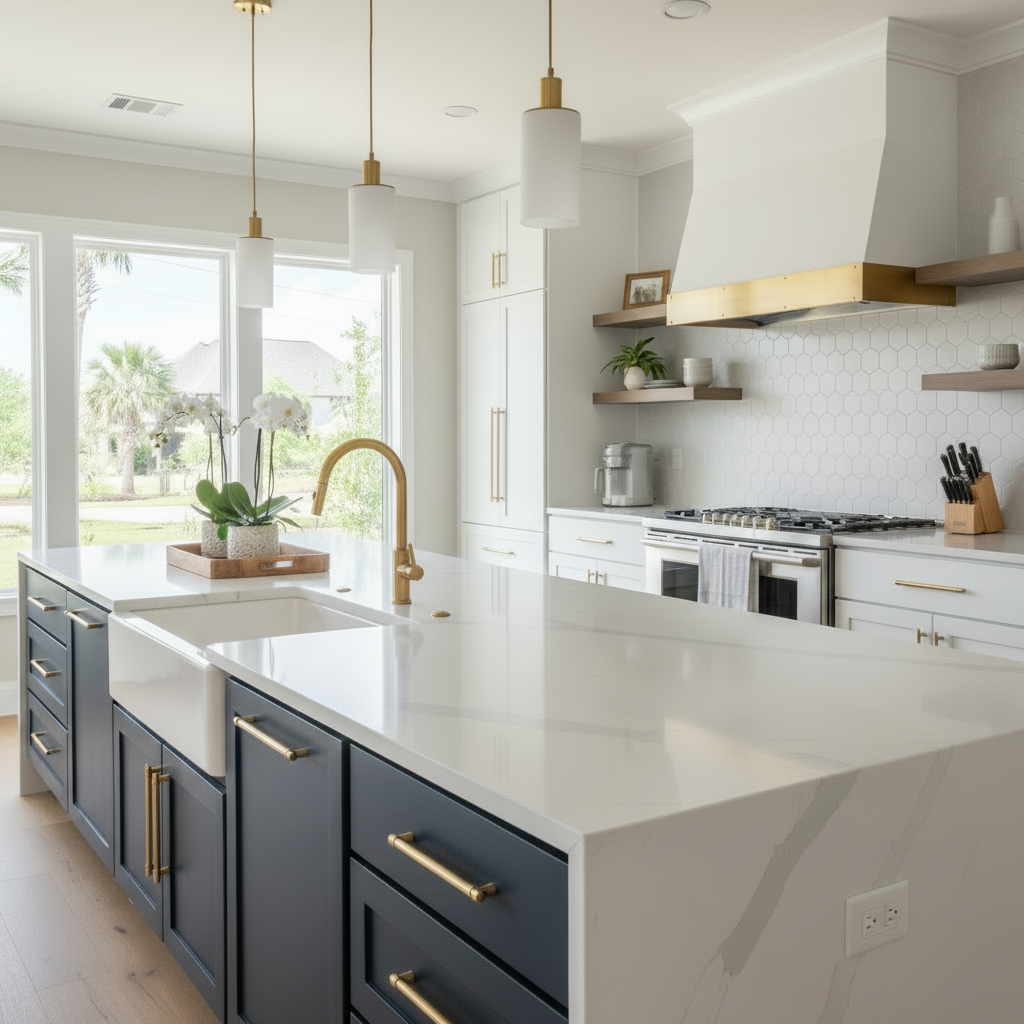
Choosing durable countertop materials in houston requires looking at how you live. If you want a kitchen that looks like a magazine cover with zero maintenance and maximum moisture resistance, quartz is the winner. If you are building an outdoor oasis or value the one-of-a-kind artistry of nature, granite is the path forward.
Key Takeaways for Houston Homeowners:
Quartz is best for low-maintenance, high-moisture indoor kitchens.
Granite is the only choice for outdoor kitchens due to UV stability.
Maintenance: Quartz requires no sealing; Granite requires sealing every 12-24 months.
- Heat: Granite is more heat-resistant; Quartz can scorch under extreme temperatures.
When you're ready to upgrade your kitchen, working with an experienced houston general contractor ensures your material choice is backed by professional installation and local climate expertise. Contact Blue Jay today to schedule a consultation and see our latest slab selections.